Ornithology: The Passion and Science Behind Studying Birds
Explore ornithology, the scientific study of birds, and discover why millions study birds with passion. Learn how BirdTune brings ornithological tools to every birder.
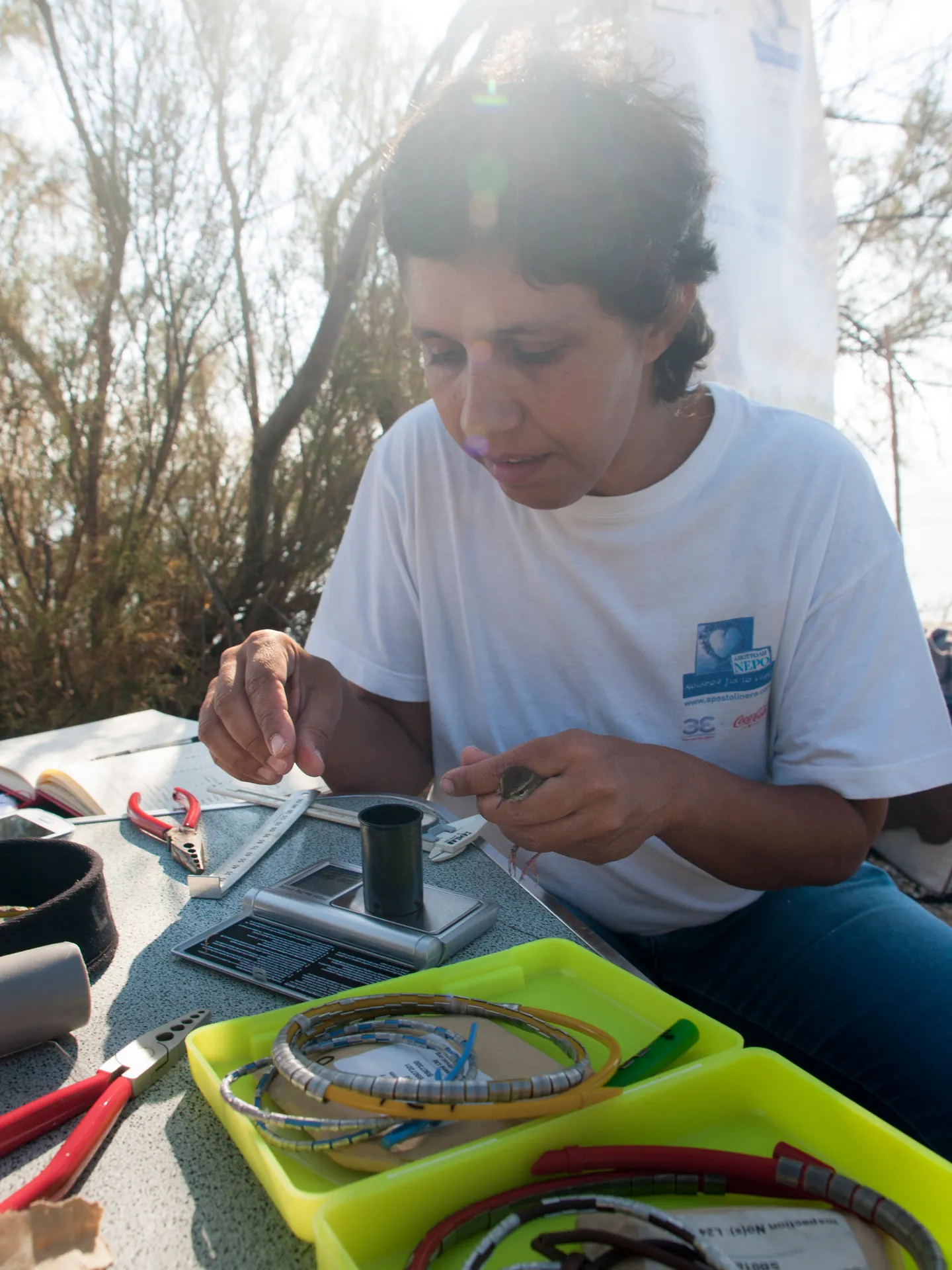 Petsikos · CC BY-SA 4.0 · Wikimedia Commons
TL;DR: Ornithology is the scientific study of birds, and it matters more than ever: bird populations are under real pressure even as tens of millions of people take up birding, with citizen-collected data increasingly driving the research that tracks both trends.
Ornithology, the scientific study of birds, has captivated scientists and everyday nature lovers alike for centuries. From migration patterns and anatomy to conservation and citizen science, this guide explores what ornithology is, why it matters, and how modern tools are making the science of birds accessible to everyone.
What Is Ornithology?
Ornithology is the branch of zoology dedicated to the scientific study of birds. The word comes from the ancient Greek ornis (bird) and logos (study of). It covers everything from anatomy, physiology, and behavior to ecology, migration, and conservation. Birds were among the first animals humans documented systematically, with some of the earliest stone-age cave drawings depicting avian species, and the field has been growing in depth and reach ever since. For a deeper look at the discipline's history and research methods, see our companion guide to the science of birds and their study.
What sets ornithology apart from most scientific disciplines is the extraordinary role that non-professionals play in it. From migration tracking to population monitoring, amateur birders contribute data that shapes scientific understanding at a global scale, making it one of the few fields where your backyard feeder can legitimately advance research.
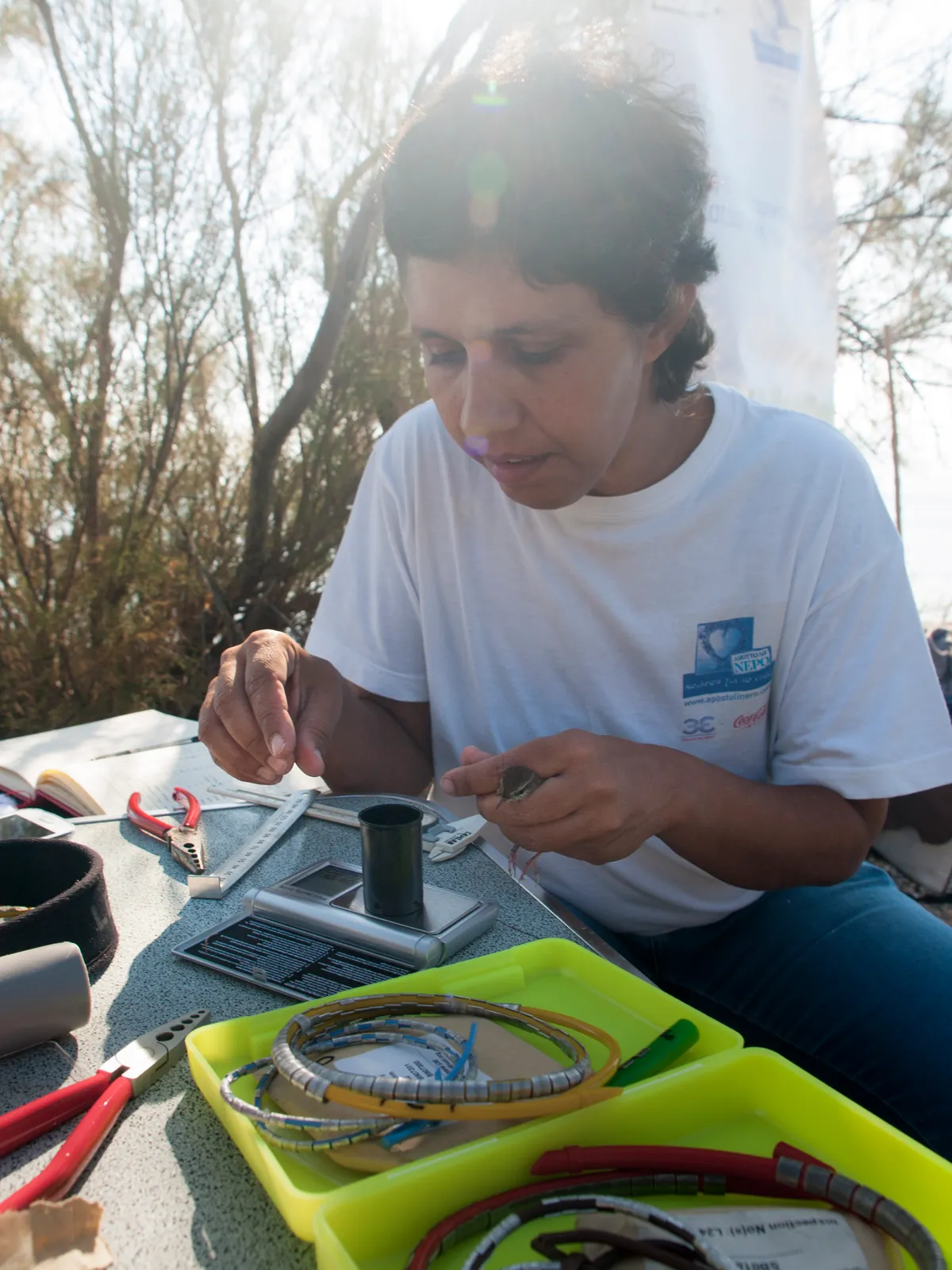
Why People Fall in Love With Studying Birds
There is something about birds that gets under your skin. Part of it is accessibility: unlike most wildlife, birds are everywhere, visible in cities and suburbs as much as in wilderness areas, and active during daylight hours when people are too. Part of it is variety: with roughly 10,000 known species worldwide, there is always something new to find, learn, and understand.
But the deeper pull is what each bird represents. A single species carries millions of years of evolutionary history in its beak shape, its feather structure, its song, and its migration route. Learning to read those signals, to look at a bird and understand not just its name but its whole life strategy, is one of the most quietly satisfying skills a person can build.
Many ornithologists describe the moment they were "hooked" as a single unexpected encounter: a raptor overhead, an unfamiliar song at dawn, a flash of color in an otherwise ordinary park. That moment of not knowing, followed by the need to know, is where the passion starts. Once it starts, it rarely stops.
Why Ornithology Matters More Than Ever
The urgency behind bird science has never been greater. The numbers are stark:
- 3 billion birds have been lost in North America since 1970, according to a landmark 2019 study published in Science
- The 2025 U.S. State of the Birds Report found that more than one-third of U.S. bird species are of high or moderate conservation concern
- 229 species currently require urgent conservation action
- 112 species have lost more than 50% of their populations over the last 50 years
- 42 red-alert species, including Allen's Hummingbird and the Saltmarsh Sparrow, face perilously low populations without immediate intervention
- A 2025 study analyzing 36 million bird observations found that 83% of studied species are declining most severely where they were once most abundant, the very places that should be strongholds
Despite this, the economic and social case for birds has never been stronger either. According to the 2025 State of the Birds Report, nearly 100 million Americans are engaged in birding activities. Birding-related activities generate a $279 billion total economic output and support 1.4 million jobs across the United States. Research also shows that regular encounters with birds measurably reduce stress, anxiety, and depressive symptoms in people.
The conclusion is hard to escape: birds are both in trouble and more valued by the public than at any point in recorded history. Ornithology sits at the center of that tension.
What Ornithologists Actually Study
The field is far broader than identification. Modern ornithology includes:
Anatomy and physiology - understanding how a bird's hollow bones, air sac respiratory system, and specialized beak structures work together to make it capable of feats like flying non-stop for days during migration.
Behavior and ecology - why birds sing, how they establish and defend territory, how they choose mates, how they navigate thousands of miles without GPS, and how they adapt when habitats change.
Migration science - tracking tools including radar, satellite telemetry, and geolocators have revealed that more than 1.2 billion birds can pass over North America in a single night, a record measured by live radar in September 2025.

Conservation biology - using population data to identify which species are declining, where, and why, and then designing interventions before it is too late.
Citizen science - training and coordinating networks of everyday bird watchers whose collective observations provide data at scales no professional research team could replicate alone.
No need to guess what you just saw or heard
Curious what the science says about the bird in front of you right now? BirdTune pulls the species profile the moment you identify it.
BirdTune: Ornithological Tools in Your Pocket
The gap between professional ornithology and everyday bird watching has been narrowing rapidly, and BirdTune is part of that shift.
Identify by Photo, Sound, or Feather
Point your camera at a bird and get an instant species match. Record a call or song and BirdTune identifies the species from the audio alone. Uniquely, BirdTune can also identify a bird from a feather image, letting you connect a found feather to the species it came from, a feature that goes beyond what most identification tools offer.
Full Species Profiles: More Than Just a Name
Every identification in BirdTune connects to a detailed species profile covering:
- Territory - the geographic range and specific habitat types the species occupies
- Physique - physical description, size, wingspan, and distinguishing field marks
- Weight and measurements - documented weight range and body size data
- Diet - what the bird eats, how it forages, and which food sources it relies on by season
- Location - where the species is currently found and how its range shifts with migration
This is the same type of information ornithologists record in field research, available to anyone with a phone.
Save Sightings with Coordinates and Journal Notes
Every sighting you log in BirdTune can be saved with:
- GPS coordinates captured at the moment of the sighting
- Date and time automatically recorded
- Journal notes you write yourself, habitat observations, behavior, weather conditions, anything that adds context to the record
- Photos and audio attached directly to each entry
This turns every outing into a structured field record, the same discipline professional ornithologists practice, built into a tool designed for anyone. If you want to build that habit from scratch, our guide on how to record and track bird sightings walks through it step by step.
Share a Sighting With a Single Link
Found something worth telling someone about? BirdTune lets you share an identification, photo, or note as a link. Whoever you send it to can open it and see exactly what you found, no BirdTune download required on their end. It's a fast way to loop in a birding friend or anyone who was standing next to you when you heard the call.
The Citizen Scientist's Role in Ornithology
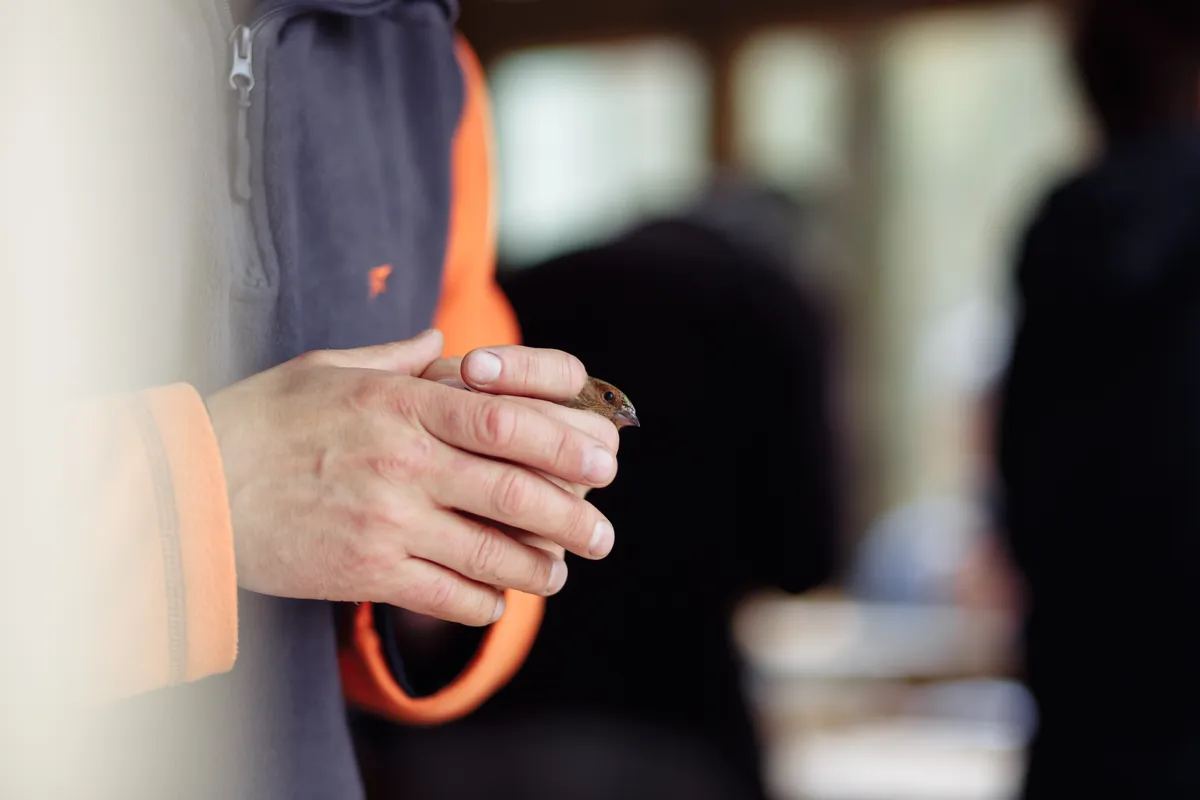
One of the most important findings in modern bird research is how much non-professional observers contribute. The 2025 population decline study analyzed 36 million bird observations shared by everyday birders, producing scientific results that would have been impossible without that collective input. Each observation you make and record, the species, the location, the date, adds to a global picture that researchers depend on.
BirdTune is built to make that kind of careful, structured observation easy for anyone. You don't need a degree or a professional field kit. You need curiosity, a phone, and the habit of noting what you see.
Getting Started With Ornithology
Formal study is one path into ornithology, but it's far from the only one. Most working ornithologists will tell you that consistent field observation, a genuine record of what you see, where, and when, is the foundation everything else builds on.
Start with what's outside your window. Learn the birds at your feeder or in your nearest park. Note their beak shapes, their behavior, their calls. Log your sightings with coordinates and notes. Over time, that log becomes a personal dataset, one that might contribute to something larger than a single backyard. If you're brand new to the hobby, our bird watching beginner's guide is a good place to start.
BirdTune handles the identification and the record-keeping. The curiosity is yours to bring.
References
- Rosenberg, K.V., et al. "Decline of the North American Avifauna." Science, vol. 366, no. 6461, 2019, pp. 120-124. Source for the "3 billion birds lost since 1970" figure. https://www.science.org/doi/10.1126/science.aaw1313
- "The State of the Birds in the U.S.A." State of the Birds 2025, a coalition report from American Bird Conservancy, Cornell Lab of Ornithology, Ducks Unlimited, and National Audubon Society. Source for the conservation-concern share, the 229 species requiring urgent action, the 100 million American birders, and the $279 billion/1.4 million jobs economic figures. https://www.stateofthebirds.org/2025/state-of-the-birds-usa/
- "Tipping Point Species." State of the Birds 2025. Source for the 112 tipping point species and the 42 red-alert species. https://www.stateofthebirds.org/2025/tipping-point-species-2025/
- Cornell Lab of Ornithology and American Bird Conservancy, published in Science, May 2025. Source for the 36-million-observation study and the 83% finding on where declines are steepest. https://www.birds.cornell.edu/home/study-shows-how-millions-of-bird-sightings-unlock-precision-conservation
- "Record-Breaking Night of Bird Migration Detected with Radar." Cornell Chronicle / BirdCast, September 2025. Source for the 1.2 billion birds recorded in a single night. https://news.cornell.edu/stories/2025/09/record-breaking-night-bird-migration-detected-radar
Try it on the next bird you hear
BirdTune puts ornithological tools in your pocket: identify birds by photo, sound, or feather, explore full species profiles, and log every sighting with GPS coordinates and journal notes, across 50+ countries with 500+ identifications daily.
FAQ: Ornithology and Studying Birds
Do I need to study biology formally to call myself an ornithologist?
Informally, no: many dedicated birders describe themselves as amateur ornithologists based on the depth and rigor of their own observation and study. Formally, the title is usually reserved for those with academic training or professional research roles, but the line is more about depth of engagement than a credential.
What's the fastest way to start contributing real data as a beginner?
Consistent, accurate sighting logs submitted through a citizen science platform. Even simple records (species, date, location) become genuinely useful once aggregated with thousands of other observers' data, which is exactly how much of modern population research gets built.
Why are amateur birders so central to ornithology compared to other sciences?
Scale. Birds are visible, active during the day, and present almost everywhere humans are, which means a global network of non-professional observers can generate far more observation data than any funded research team could collect alone.
Is ornithology mostly about identification, or is that just the starting point?
Just the starting point. Identification is the entry skill, but the field covers anatomy, behavior, migration, ecology, and conservation: a deep, structured body of science that goes well beyond naming what you're looking at.